Quick answer
Norwegian fjords cruises best time go runs from May through September, with peak conditions mid-June to August when water remains calm, daylight extends past 22:00, and temperatures reach 15–20°C. Early May and late September offer fewer crowds and lower rates but shorter viewing windows and variable weather. Winter cruises operate but face limited daylight and frequent fog.
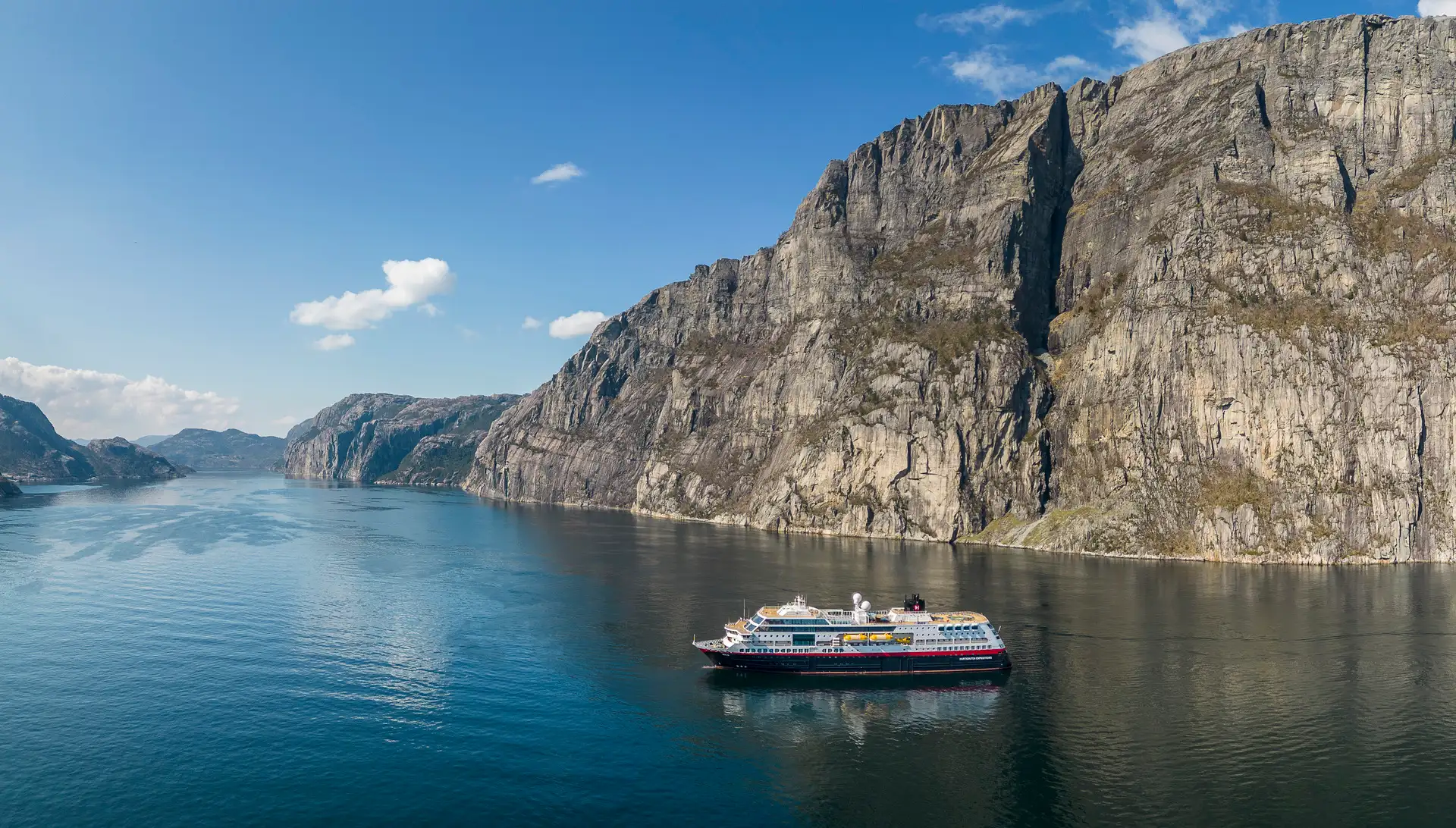
Lysefjord's cruise season operates around a simple constraint: the steep granite walls that define the fjord cast deep shadows, and without sufficient daylight, the waterfalls and rock formations that give the passage its drama vanish into silhouette. The best months for fjord cruises balance three variables—calm water, extended daylight, and clear skies—and those variables align most reliably between late May and early September. Mid-June through August delivers the longest viewing windows, with sunset occurring after 22:00 and nautical twilight stretching well past midnight. The midnight sun phenomenon, visible from late May through July in this latitude, means evening departures still capture the full fjord panorama. Water temperatures rise to their annual peak in August, reducing the fog that can settle over the fjord in spring and autumn. Air temperatures during these months hover between 15°C and 20°C, warm enough for deck viewing without the wind chill that characterizes shoulder-season cruises. This is also when waterfall flow is strongest, fed by late-season snowmelt from the surrounding plateau. Shoulder months—May and September—offer practical advantages for visitors prioritizing solitude and cost over optimal conditions. Early May sees the fjord transition out of its winter dormancy, with daylight hours climbing rapidly but water temperatures still cold enough to generate morning mist. September reverses this pattern, with daylight contracting quickly after the autumn equinox but water retaining summer warmth. Both months see significantly fewer cruise departures and lower booking demand, which translates to better availability and reduced rates. The tradeoff is weather volatility: low-pressure systems move through the region more frequently, bringing rain and reducing visibility. Winter cruises, while available, confront the reality of a 6-hour daylight window and frequent overcast skies. Departures cluster in the narrow 09:00–16:00 arrival window to maximize what limited natural light exists. The fjord's scale remains impressive under any conditions, but the detail that defines summer viewing—individual seabird colonies on cliff ledges, the texture of lichen-covered rock, the spray patterns of waterfalls—recedes into monochrome distance. Visitors planning a Lysefjord cruise should align their timing with what they value most: summer's extended visibility or the stark, emptied quality of the off-season fjord.
“The fjord's scale remains impressive under any conditions, but summer detail recedes into monochrome distance once daylight contracts.”
Norwegian Fjords Cruises Best Time Go: Seasonal and Daily Windows
The period from May through August offers the most daylight for exploring Lysefjord. Targeting the best arrival window of 09:00–16:00 ensures favorable lighting for viewing cliffs and waterfalls.
May–August
Moderate to highMild temperatures 12°C–18°C
Long daylight hours provide optimal conditions for photography and fjord sightseeing.
September–October
LowerCooler temperatures 8°C–14°C
Autumn colors appear, though daylight hours decrease compared to peak summer.
Weekday mornings
Low—
Arriving during the best arrival window of 09:00–16:00 minimizes crowd density while maximizing visibility.
Verdict: For the best experience, plan your visit between May and August, arriving within the 09:00–16:00 window.
Admission Fees for Norwegian Fjords Cruises Best Time Go
Access to the Lysefjord area itself does not require an entrance fee. Costs associated with visiting the region typically depend on transport or tour selections rather than site admission.
Notable Sights for Norwegian Fjords Cruises Best Time Go
The Lysefjord cruise experience focuses on prominent geological formations and vertical landscapes carved by glacial activity. These natural landmarks are most visible when observing the shoreline and cliff faces from the water.
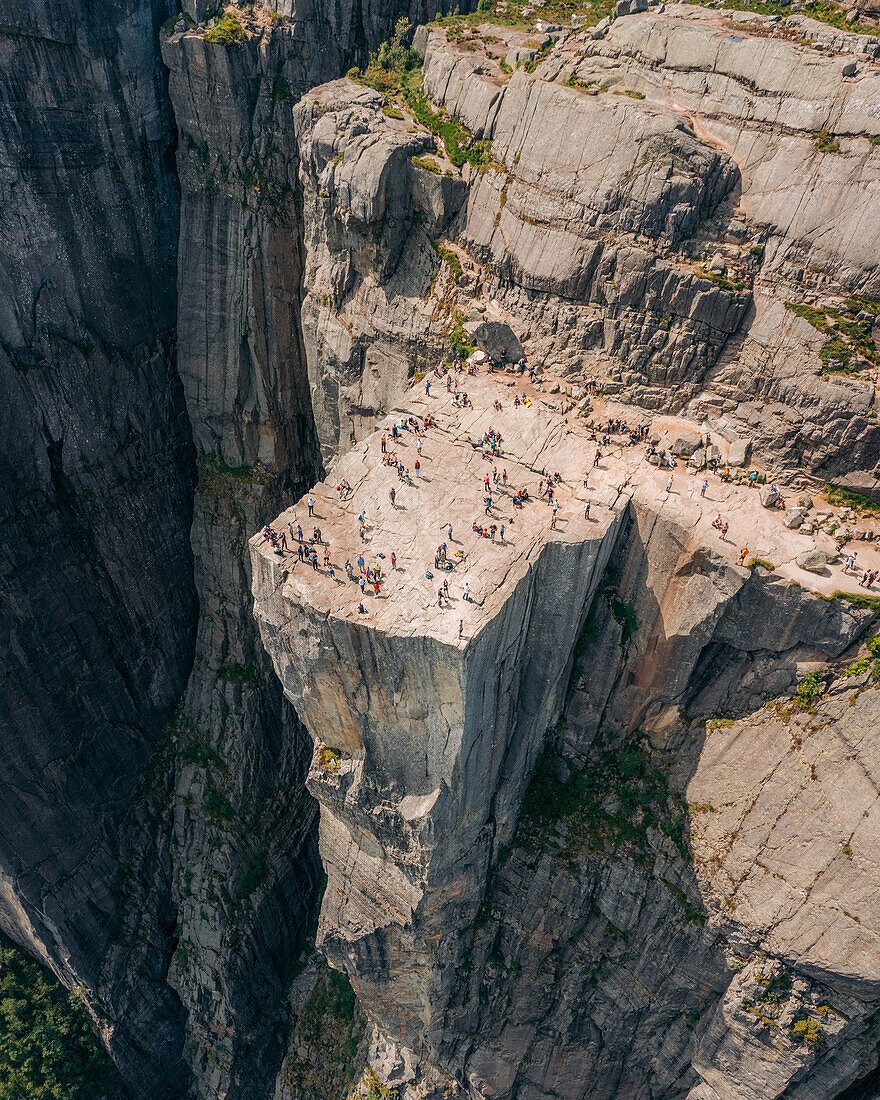
Preikestolen
A flat-topped cliff rising 604 meters above the fjord, forming one of the most recognized vertical rock formations in the region.
Bring binoculars to identify hikers standing near the plateau edge.
Kjerag
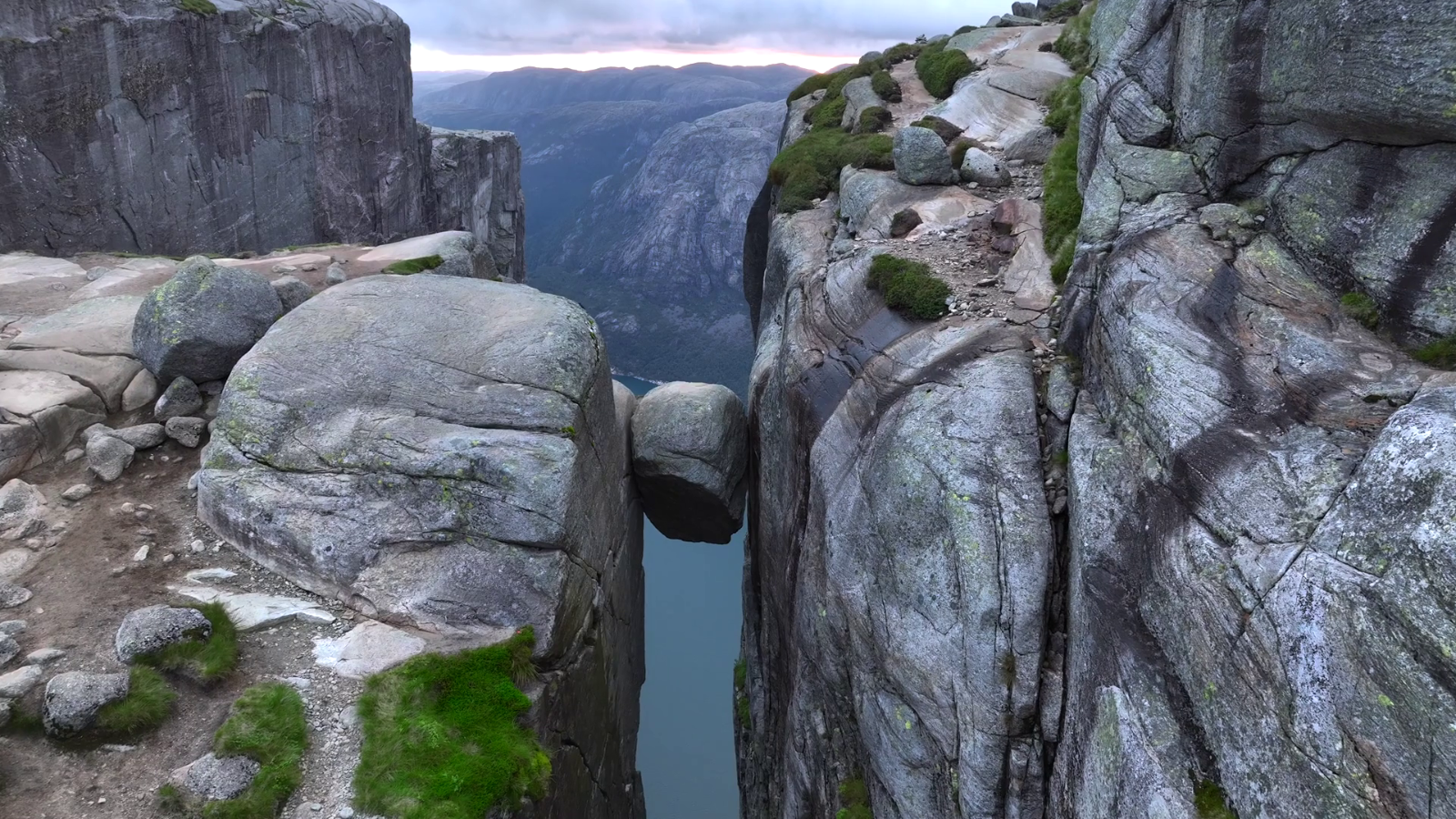
A mountain plateau famous for the Kjeragbolten, a boulder wedged between two rock faces at an elevation of 984 meters.
Look for the narrow crevice where the boulder remains suspended.
Hengjanefossen
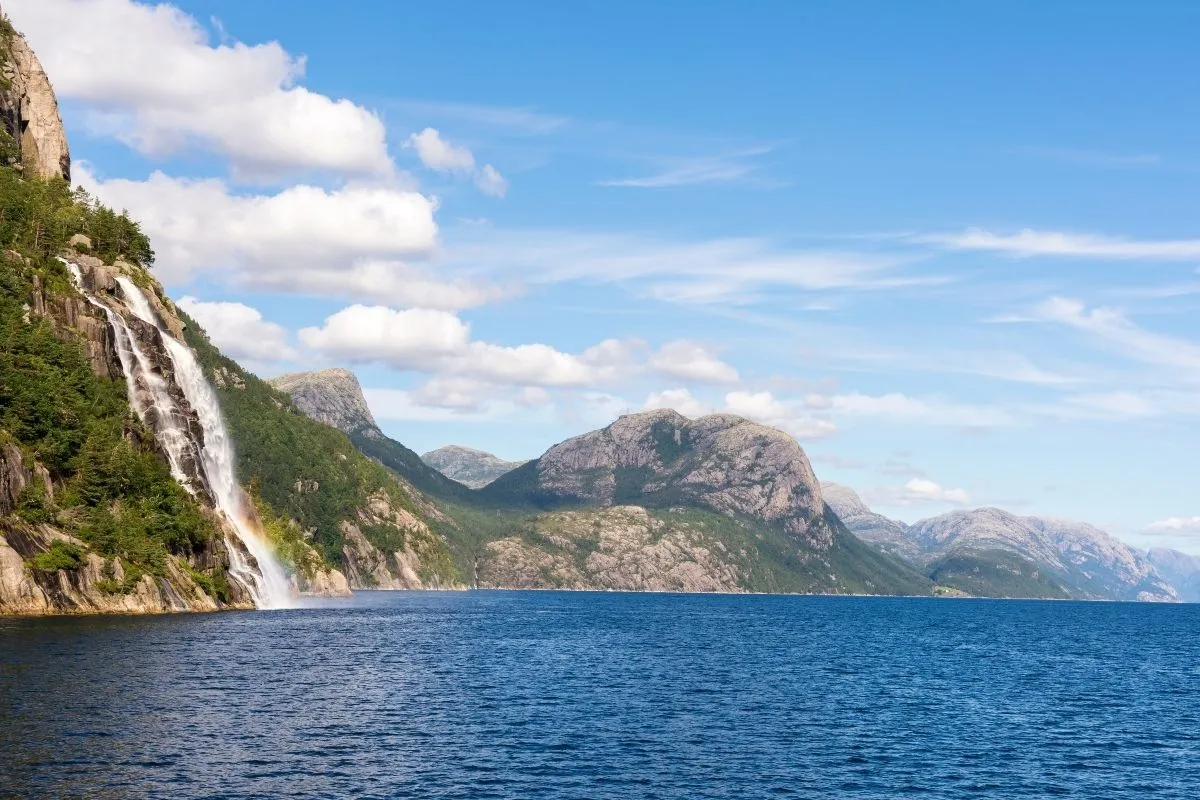
A prominent waterfall that drops directly into the fjord, often accessible for close approaches by cruise vessels.
Check the wind direction to avoid spray when the vessel approaches.
Fantahålå
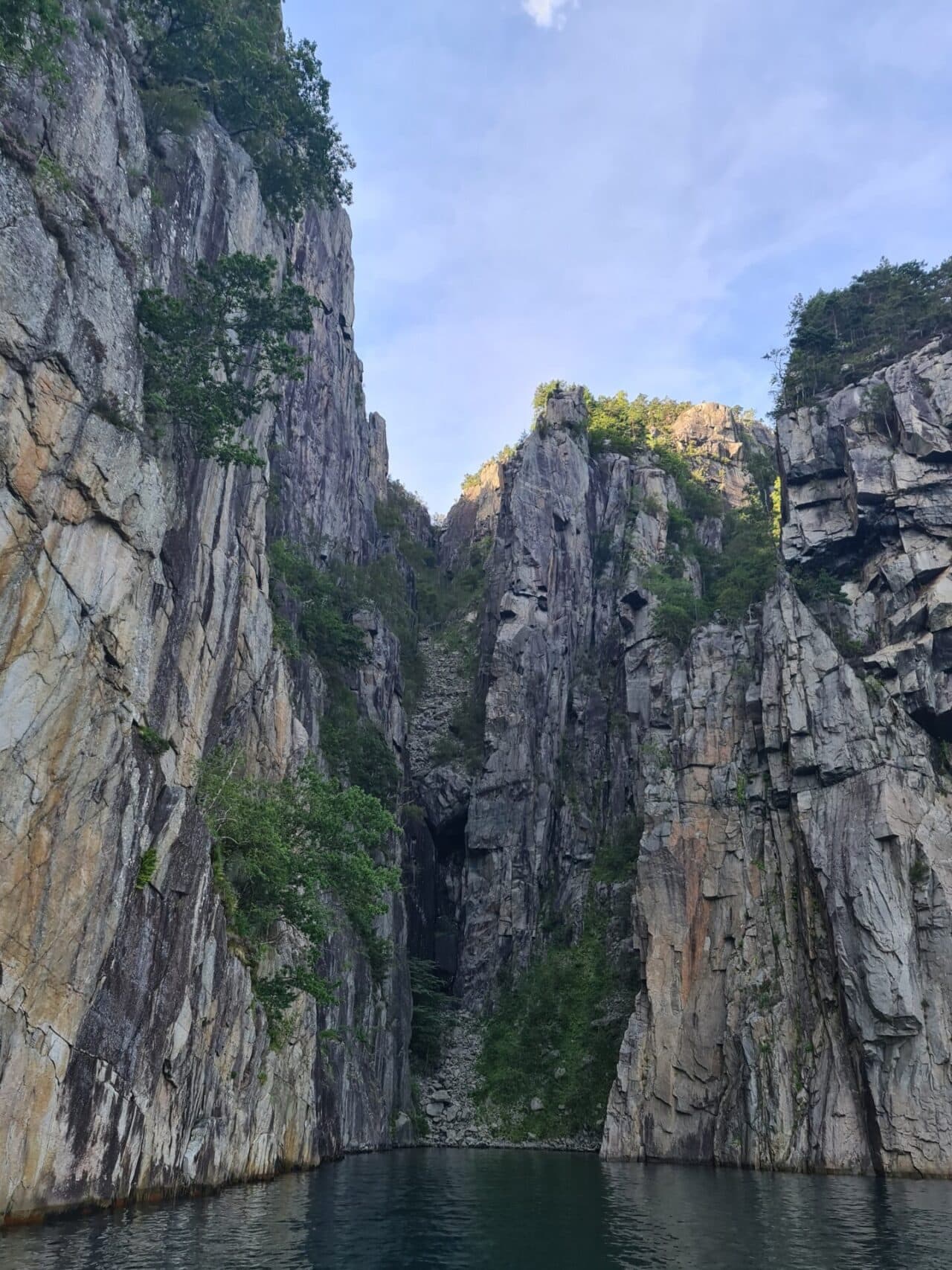
A narrow cave known as the Vagabonds' Cave, historically used by those hiding from authorities.
Watch the captain navigate the vessel close to the steep rock walls.
Pre-Visit Prep: Norwegian Fjords Cruises Best Time Go
A fjord cruise requires minimal advance planning but benefits from checking weather forecasts and packing appropriate layers.
-
Check weather forecasts for your travel dates — Lysefjord conditions change rapidly and affect visibility
-
Book cruise tickets online in advance — Secure your preferred departure time during peak season
-
Pack waterproof outer layers and warm clothing — Deck temperatures drop significantly even in summer
-
Bring binoculars for wildlife and cliff details — Seals and seabirds appear along the 42-kilometer route
-
Charge camera batteries and clear storage space — The journey covers Preikestolen views and multiple waterfalls
-
Arrive at departure point 15 minutes early — Allows time for boarding and securing optimal viewing positions
-
Download offline maps of the Lysefjord area — Mobile coverage weakens inside the narrow fjord corridor
Check availability
Frequently Asked Questions About Lysefjord Cruises
Everything you need to know about norwegian fjords cruises best time go